Corneal Cross-Linking in Thailand Your guide to cost, top specialists & hospitals
The only treatment proven to stop keratoconus progression. One session, lasting stability.
What Is Corneal Cross-Linking?
Also known as: CXL Treatment · Corneal Collagen Cross-Linking (CXL)
Corneal cross-linking is a treatment that strengthens the cornea by forming new bonds between its collagen fibres. It works by soaking the cornea in riboflavin, which is vitamin B2, then shining controlled ultraviolet-A light onto it1,2, a reaction that stiffens and stabilises the tissue. It is used to halt keratoconus, where the cornea thins and bulges into a cone, and the similar ectasia that can follow LASIK. A session takes about 60 to 90 minutes per eye, and the effect tends to last, with around 95% of eyes staying stable. It is often called CXL.
Being told your cornea is changing shape, and that you may travel to stop it, is a lot to take in. The aim is to halt the disease, not to undo what has happened. Your surgeon checks corneal thickness and shape first, then chooses the standard epi-off or the gentler epi-on method.
Honestly, cross-linking mostly holds your vision where it is rather than sharpening it, so many people still wear glasses or contacts. A consultation confirms whether your keratoconus is progressing and your cornea is thick enough to treat safely.
It can address a range of concerns, including:
Am I a Good Candidate for Corneal Cross-Linking?
Cross-linking candidacy hinges on two measurements: topography that proves your keratoconus is progressing, and a cornea thick enough to treat safely.
The treatment stops progression, so surgeons first confirm there is progression to stop.
Serial topography: Scans over 6-12 months showing increasing curvature, thinning, or shape change establish the indication; bring your records or send them ahead.
Stable disease waits: If recent scans show no progression, the timing of treatment is reconsidered rather than rushed.
Age informs, never decides: Most patients are younger, but there is no strict upper age limit; documented progression is what counts.
Post-LASIK ectasia qualifies: Progressive ectasia after refractive surgery is treated the same way.
A minimum stromal thickness of roughly 400 microns protects the deeper structures from the UV light.
Pachymetry first: Thickness is measured before and during the procedure; this check is non-negotiable.
Thin corneas adapt: Hypotonic riboflavin to swell the cornea or the epi-on protocol can make borderline corneas treatable.
Some are deferred: Below the safe threshold, the protocol is modified or treatment deferred rather than forced.
The corneal surface needs to be quiet and clear before riboflavin and UV light are applied.
No active infection: Any corneal infection is fully treated before cross-linking.
Central scarring assessed: Advanced keratoconus with significant scarring may stabilise but not see better, so expectations are set accordingly.
Herpetic history flagged: UV exposure can sometimes reactivate herpetic eye disease, so any history is discussed in advance.
Cross-linking is judged by what stops happening, not by sharper vision.
Stabilisation, not improvement: Vision typically returns to pre-procedure levels within 2-3 months; modest gains are a bonus, not the goal.
Strong long-term data: Around 95% of epi-off patients remain stable.
Correction continues: Glasses or contacts are still needed afterwards; intracorneal rings or topography-guided laser can address residual error later.
Who is not suitable for corneal cross-linking?
- Corneas thinner than the safe threshold without a modified protocol
- No documented progression on serial topography
- Active corneal infection until fully treated
- Significant central scarring without an adjusted expectations discussion
- Herpetic eye disease history not yet discussed with the surgeon
- Severe dry eye or autoimmune ocular surface disease (such as Sjogren's or a Stevens-Johnson history) that impairs epithelial healing
Pricing
How Much Will Corneal Cross-Linking Cost in Thailand?
What corneal cross-linking costs at accredited hospitals in Thailand, and what your final quote depends on.
Get your exact price
Tell us what you're considering and we'll send a personalised quote from accredited hospitals within 24 hours.
Get a Free QuoteTypical prices in Thailand
Typical ranges based on recent hospital quotes. Your exact price depends on the hospital and how complex your case is, and is confirmed at your teleconsultation.
Corneal Cross-Linking
The cornea is soaked in vitamin B2 drops, then bonded with ultraviolet light that stiffens the tissue and stops the bulge from worsening.
| Epi-off cross-linking, per eye Surface layer lifted so the drops reach the cornea directly, the standard for most patients | $1,500 to $1,900 ฿51,000 to ฿64,600 |
| Epi-on cross-linking, per eye Surface layer left intact for an easier recovery, an option when the cornea is thinner | $1,800 to $2,200 ฿61,200 to ฿74,800 |
| Accelerated cross-linking, per eye Stronger light over a shorter session, where the cornea suits the faster protocol | $2,100 to $2,700 ฿71,400 to ฿91,800 |
Typically not included
- Treatment of your second eye. These figures are per eye, and both eyes are usually quoted as a package rather than simply doubled
- Intracorneal ring segments or a topography-guided laser step, if a combined CXL-Plus procedure is recommended for your case
- Glasses, contact lenses, or a scleral or rigid lens refit afterwards, arranged with your own optometrist rather than with us
- Serial topography scans once you are home to confirm the cornea stays stable, itemised individually by your eye doctor
- A corneal transplant or repeat cross-linking, in the rare event keratoconus keeps progressing after treatment
Get your exact price
Tell us what you're considering and we'll send a personalised quote from accredited hospitals within 24 hours.
Hospitals Trusted for Corneal Cross-Linking
From internationally accredited flagships to dedicated specialist hospitals, these are the kinds of facilities where international patients have this procedure.
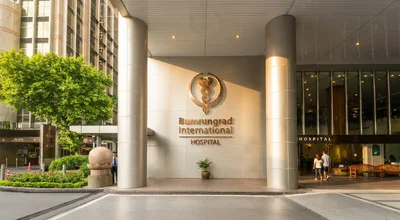
Bumrungrad International Hospital
Full-service hospital with over 1,200 physicians treating 520,000+ international patients a year.
View hospital profile
Bangkok Hospital
BDMS flagship hospital campus with standalone heart, cancer, and neuro-orthopaedic hospitals.
View hospital profile
Samitivej Sukhumvit Hospital
Full-service hospital known for paediatrics, home to Thailand's first private children's hospital.
View hospital profile
Tell Us What You Need. We Do the Rest.
Share what you're considering and we'll come back with surgeon options, pricing, and a clear plan.
- Real hospital pricing with zero markup
- Matched with a specialist experienced in your specific procedure
- Full coordination from consultation to recovery


Trusted by patients worldwide
The complete guide to Corneal Cross-Linking in Thailand
Everything below is for readers who want the full detail: costs broken down, types and techniques, recovery, risks and safety, and planning your trip.
Corneal Cross-Linking Specialists in Thailand
Cross-linking is straightforward as a procedure, but the decision-making (when to treat, which protocol, and whether to combine with other interventions) requires corneal subspecialist judgment.
Leading Corneal Centres in Bangkok
Our partner centres have dedicated corneal departments with Scheimpflug and corneal topography systems for monitoring keratoconus progression, calibrated UV-A irradiation systems, and pharmaceutical-grade riboflavin. They offer both epi-off and epi-on protocols and can perform combined CXL-Plus procedures when indicated.
Experienced Corneal Surgeons
Our partner surgeons manage keratoconus patients across the full disease spectrum, from early cross-linking to intracorneal rings to corneal transplant when needed. That breadth of experience means they know when cross-linking alone is sufficient and when a combined or alternative approach is more appropriate.
Pre-Operative Topography Review
If you have serial corneal topography scans from your home ophthalmologist, our surgeons can review them before you travel to confirm that cross-linking is indicated and appropriate. This saves time on arrival and allows the procedure to be scheduled efficiently during your stay.
Understanding Your Results
Cross-linking results are measured by what does not happen: progression that stops, vision that stabilises, and a transplant that is no longer needed.
Typical Results
Around 95% of patients achieve corneal stabilisation after epi-off cross-linking. Some patients experience modest improvement in corneal curvature and visual acuity. The primary metric of success is topographic stability: a cornea that is no longer getting steeper or thinner. By preventing progression, cross-linking preserves the patient's existing vision and avoids the need for corneal transplant1.
What Results Can You Expect?
Cross-linking stabilises rather than improves. Vision typically returns to pre-procedure levels within 2–3 months. Some patients see modest improvement, but this should not be the primary expectation. The goal is to halt the disease. Further visual correction with glasses, contacts, or future procedures like intracorneal rings can address any residual refractive error.
Corneal Cross-Linking Cost in Thailand
Average Cost of Cross-Linking
Corneal cross-linking in Thailand typically costs between $1,500 and $2,700 per eye. Epi-off and epi-on are priced comparably. The total includes the riboflavin drops, UV-A treatment, all post-operative medications, bandage lens, and follow-up appointments during your stay.
Cost Breakdown
The total covers the corneal surgeon's fee, pharmaceutical-grade riboflavin, UV-A irradiation system usage, topical anaesthesia, bandage contact lens, all post-operative drops, and follow-up visits. There are no significant additional variables; cross-linking is a standardised procedure with predictable costs.
What Affects the Price?
There is minimal price variation because the procedure is standardised. The main variables are hospital tier and whether a combined protocol (CXL-Plus with intracorneal rings or topography-guided laser) is recommended, which adds to the total. Bilateral treatment (both eyes) is usually quoted at a package rate.
Thailand vs International Price Comparison
Cross-linking in Thailand costs 40–60% less than in the US ($3,800–$6,000), Australia (A$3,400–A$5,700), and UK (£3,000–£5,300). The riboflavin formulations and UV-A systems are the same globally. The savings come from lower surgical and facility fees.
Cross-Linking vs Glasses, Contacts and Watchful Waiting
If your keratoconus is mild and not changing, glasses or rigid gas-permeable and scleral contact lenses can keep your vision usable without any procedure, and many people manage this way for years. Specialist lenses in particular sit over the irregular cornea and mask a lot of the distortion. Some eye doctors also simply monitor the cornea with serial topography, treating only if scans show it is getting worse.
What none of these can do is stop the disease. Glasses, lenses and watchful waiting correct or track the problem, but the cornea can keep thinning and bulging underneath, and a prescription that has to be updated again and again is often the sign that it is. Left to progress, keratoconus can reach the point where contacts no longer fit and a corneal transplant becomes the only option. The conservative route also depends on consistent monitoring, which is easy to let slip.
Cross-linking is the only treatment shown to halt that progression1,2, which is why it is worth doing once topography confirms the cornea is actively worsening and still thick enough to treat. It does not replace your glasses or contacts, and arranging those lenses sits with your own optometrist rather than with us. It protects the vision you have so the disease does not take more of it, and that is what the rest of this page covers.
Types of Cross-Linking Available
The two main protocols differ in whether the epithelium is removed. This affects both the strength of the treatment effect and the recovery experience. The evidence strongly favours epi-off, but epi-on has a role in specific situations.
Epi-Off Cross-Linking (Dresden Protocol)
The epithelium is removed so riboflavin penetrates the corneal stroma directly, followed by 30 minutes of UV-A irradiation. This is the gold-standard technique with the most robust evidence. Recovery is more uncomfortable (3–5 days with a bandage contact lens), but efficacy is highest.
- Strongest clinical evidence, with stabilisation rates around 95%
- Maximum riboflavin penetration for the deepest cross-linking effect
- Bandage lens worn for 3–5 days while epithelium regenerates
- Best for: most keratoconus patients. This is the standard of care
Epi-On Cross-Linking (Transepithelial)
The epithelium stays intact while specially formulated riboflavin drops penetrate through the surface. Less painful recovery with lower infection risk, but long-term data is still maturing compared to epi-off. May be suitable for thinner corneas where epi-off would leave insufficient stromal thickness.
- Faster, more comfortable recovery with less post-operative pain
- Lower infection risk as the corneal surface remains intact
- Less proven long-term efficacy than epi-off, with evidence still accumulating
- Best for: patients with thinner corneas or strong preference for a gentler recovery
Cross-Linking Techniques
Cross-linking technique is standardised, but the details of riboflavin formulation, UV exposure time, and corneal thickness management have evolved since the original Dresden protocol. Thailand's corneal centres use current-generation protocols.
Accelerated Cross-Linking
Higher UV intensity for a shorter exposure time delivers the same total energy dose as the standard 30-minute protocol in approximately 10 minutes. Patient comfort is improved and total procedure time is reduced. Clinical data shows equivalent stabilisation rates to standard protocols for most patients.
- Same total UV energy dose delivered in less time
- Improved patient comfort during UV exposure
- Equivalent stabilisation rates in published studies
- Best for: patients preferring a shorter treatment session
CXL-Plus (Combined Protocols)
Cross-linking can be combined with intracorneal ring segments or topography-guided laser treatment in selected patients. This addresses both the structural weakening and the refractive error simultaneously. Whether a combined approach suits your specific case is assessed during the consultation.
- Addresses structural instability and refractive error together
- Intracorneal rings flatten the cone and improve contact lens fit
- Topography-guided laser can reduce irregular astigmatism
- Best for: patients with both progressive keratoconus and significant refractive error
Iontophoresis-Assisted Cross-Linking
A transepithelial method that uses a small, painless electric current to drive riboflavin through the intact corneal surface, rather than relying on drops alone to soak through. The aim is better riboflavin penetration than standard epi-on while still avoiding epithelial removal. Recovery is gentle like epi-on, and it is offered at select corneal centres rather than everywhere.
- Low electric current improves riboflavin uptake through intact epithelium
- Gentler recovery than epi-off, with no surface wound to heal
- Long-term evidence is still maturing compared to standard epi-off
- Best for: patients wanting an epithelium-on option with deeper riboflavin loading
Corneal Cross-Linking Recovery Timeline
Day 1
Mild to moderate discomfort, light sensitivity, and tearing are common, particularly with epi-off. A bandage contact lens protects the surface. Antibiotic and anti-inflammatory drops begin. Rest in a dimly lit room is recommended.
Days 2–5
Discomfort gradually eases. The bandage lens is removed once the epithelium has healed, typically day 3–5 for epi-off. Vision may be hazy during this period as the epithelium regenerates. Epi-on patients recover faster.
Weeks 1–4
Vision slowly improves as the cornea settles. Some temporary fluctuations in clarity are normal. Continue prescribed drops on the tapering schedule. Avoid rubbing your eyes and swimming.
Months 1–6
Corneal stabilisation continues and vision gradually returns to pre-procedure levels or better. Cross-linking effect strengthens over time as new collagen bonds mature. Follow-up topography confirms the cornea has stabilised.
When Can You Fly After Cross-Linking?
Most patients can fly 5–7 days after treatment, once the epithelium has healed and the bandage lens has been removed. Epi-on patients may be able to fly sooner. Dry cabin air can aggravate temporary dryness, so bring lubricating drops for the flight. Your surgeon confirms readiness at follow-up.
When Can You Return to Work and Exercise?
Desk work can resume once the epithelium has healed, typically 5–7 days for epi-off and 2–3 days for epi-on. Light exercise after a week. Swimming should wait 2–3 weeks. Sunglasses with UV protection are important outdoors for the first several months.
When Will Results Be Apparent?
Cross-linking is designed to stop progression, not to improve vision directly. Most patients return to their pre-procedure vision within 2–3 months.1 Some experience modest visual improvement as the cornea stabilises. The real result is seen on follow-up topography: a cornea that is no longer getting worse. That stability is confirmed over 6–12 months of serial scans.
Anaesthesia for Corneal Cross-Linking
Corneal cross-linking is done under topical anaesthesia, which means numbing eye drops rather than an injection or going to sleep.1 You stay fully awake and comfortable throughout, lying back while the surgeon works, and a nurse or technician stays with you the whole time. There is no general anaesthetic and no needle near the eye, so there is none of the recovery or grogginess that comes with being put under.
The drops numb the surface of the eye completely, so you do not feel the epithelium being removed in the epi-off protocol, nor the riboflavin soaking or the UV-A light itself. A small clip gently holds the eyelids open so you do not have to worry about blinking, and you are simply asked to look towards a target light. You will see light and shadow rather than the procedure being done, and many patients are surprised by how undramatic it feels.
Before treatment your surgeon checks the cornea with topography and pachymetry to confirm it is safe to proceed, and the numbing drops are topped up as needed so comfort is maintained from start to finish. You feel nothing during the session itself. Any soreness, light sensitivity, or watering comes afterwards as the surface heals, mostly in the first few days after epi-off, and is eased by the bandage contact lens and the drops your surgeon prescribes. Epi-on recovery is gentler still.
Risks and Safety of Corneal Cross-Linking
Cross-linking has an excellent safety profile. Serious complications are rare, and the vast majority of patients tolerate the procedure well. The most common issue is temporary discomfort during the epi-off recovery.
- Temporary corneal haze that clears over weeks to months
- Eye pain during epi-off recovery (days 1–3)
- Temporary vision worsening before stabilisation
- Delayed epithelial healing (uncommon)
- Infection risk, higher with epi-off but minimised by antibiotic prophylaxis
- Sterile corneal infiltrates, an immune reaction during UV exposure that usually settles with steroid drops
- Corneal scarring (rare, more associated with very thin corneas)
- Endothelial cell damage (rare, prevented by minimum corneal thickness limits)
Minimum corneal thickness requirements exist precisely to reduce the risk of scarring and endothelial damage. Your corneal surgeon checks pachymetry before and during the procedure. If the stroma is thinner than the safe threshold after epithelial removal, the protocol is modified or the procedure deferred.
Is Cross-Linking Safe in Thailand?
Yes. Thailand's corneal surgery centres hold JCI accreditation and use pharmaceutical-grade riboflavin and calibrated UV-A systems. Our partner surgeons are fellowship-trained in corneal disease and follow established cross-linking protocols with meticulous corneal thickness monitoring. The safety profile at these centres matches published international data.
How to Reduce Risks
The most important safety factor is corneal thickness. Your surgeon measures pachymetry before and during the procedure. If the stroma is below the safe minimum, the protocol is modified, for example by using hypotonic riboflavin to swell the cornea or switching to epi-on. Never proceed with a provider who does not measure intraoperative thickness.
What If Keratoconus Continues to Progress?
Retreatment with cross-linking is possible in the rare cases where progression continues. Serial topography at home will detect any changes. If significant progression occurs despite cross-linking, corneal transplantation (either DALK or PK) may be considered, though this is uncommon after successful cross-linking.
Planning Your Trip to Thailand for Corneal Cross-Linking
Cross-linking requires 5–7 days in Thailand, longer than laser eye surgery because of the epithelial healing period, but still a straightforward short trip.
How Long to Stay in Thailand
Plan for 5–7 days. Day 1 covers your corneal assessment including topography and pachymetry. The procedure is typically scheduled for day 2. The bandage lens stays in for 3–5 days (epi-off), with removal at a follow-up appointment. Most patients are cleared to fly once the epithelium has healed.
What Is Included in a Medical Trip
Your care coordinator manages scheduling, follow-up appointments, and bandage lens removal logistics. The surgical quote covers the surgeon, riboflavin, UV-A treatment, bandage lens, all post-operative drops, and follow-up visits. Flights and accommodation are arranged separately.
Bringing Your Topography Records
If you have serial corneal topography scans showing progression, bring them or have your referring doctor send them ahead. This allows our surgeons to confirm the indication for cross-linking before your arrival, streamlining the assessment and scheduling process during your stay.
Related Procedures
Other procedures that address similar goals or conditions, in case one of them is a closer fit for you.
Planning your treatment in Thailand
Independent guides to help you weigh the decision, before you commit to anything.
Common Questions About Corneal Cross-Linking in Thailand
Everything you need to know before your procedure

Medical References
Keep researching with AI
Open this guide in your AI assistant to dig deeper and ask the questions it didn't answer.
Opens in a new tab with this guide already loaded.
Medical disclaimer: Content on this site is provided for informational purposes and should not be treated as medical advice. Outcomes, timelines, and eligibility differ from person to person. Consult a qualified medical professional before making any decisions about surgery or treatment.
Ready to Get Started?
Speak with our care coordinators for a free, no-obligation consultation and personalised quote.
Get a Free Quote