YAG Laser Capsulotomy in Thailand Your guide to cost, top specialists & hospitals
A few minutes to restore the clarity your cataract surgery originally gave you.
What Is YAG Laser Capsulotomy?
Also known as: After Cataract Laser · Neodymium-doped Yttrium Aluminium Garnet Laser Posterior Capsulotomy
YAG laser capsulotomy is a laser treatment that clears cloudy vision after cataract surgery by making a small opening in the posterior capsule, the thin membrane behind your lens implant. That membrane can turn hazy in the months or years after surgery2, scattering light before it reaches the back of the eye. The laser parts the cloudy centre to reopen the light path, and because the capsule does not grow back, the result lasts. The condition it treats is posterior capsule opacification, or PCO, sometimes nicknamed secondary cataract even though it is not a new cataract.
If your sight slowly blurred again after a successful cataract operation, this is often why, and it is one of the simplest fixes in eye care. There are no incisions and no stitches. Numbing drops go in, you rest your chin on a slit lamp for a few minutes, and you walk out the same day.
Most people notice clearer vision within a few hours, once the dilating drops wear off. It only helps when a clouded capsule is the cause, so your ophthalmologist confirms that first.
It can address a range of concerns, including:
Am I a Good Candidate for YAG Laser Capsulotomy?
Suitability is straightforward: confirmed posterior capsule opacification after previous cataract surgery, with a stable lens implant and a quiet eye.
The laser only helps if clouding of the lens capsule, not another condition, is what has blurred your vision.
PCO confirmed: An ophthalmologist verifies the membrane behind your lens implant is the cause; the haze closely mimics the original cataract.
IOL already in place: You must have had cataract surgery previously, whether in Thailand or anywhere else.
Other causes excluded: If macular degeneration or glaucoma is driving the vision loss, the laser will not address it.
A few conditions call for assessment or a management plan before the laser is applied.
Quiet eye: Active uveitis or any ongoing intraocular inflammation is controlled first.
Retinal risk reviewed: High myopia or previous retinal detachment slightly raises post-laser detachment risk, so a retina review or closer monitoring may come first.
Glaucoma planned for: Pre-existing glaucoma needs a pressure management plan around the transient post-laser spike.
Stable lens implant: An IOL not fully seated in the capsular bag is assessed before the opening is made.
When PCO is the confirmed cause, the result is typically complete, fast, and permanent.
Clarity within hours: Most patients notice the improvement within 1-4 hours, fully apparent by the next day.
One-time treatment: The opened capsule only rarely clouds over again, so a repeat is rarely needed.
Limits acknowledged: Vision returns to its post-cataract-surgery best; the laser cannot improve on what the eye was capable of then.
Who is not suitable for yag laser capsulotomy?
- Active eye infection such as endophthalmitis, which must be fully treated and resolved first
- Active uveitis or intraocular inflammation until controlled
- Unstable or poorly positioned lens implant pending assessment
- Vision loss caused by macular degeneration or glaucoma rather than PCO
- High myopia or previous retinal detachment without a retina review first
- Pre-existing glaucoma without a pressure management plan
Pricing
How Much Will YAG Laser Capsulotomy Cost in Thailand?
What yag laser capsulotomy costs at accredited hospitals in Thailand, and what your final quote depends on.
Get your exact price
Tell us what you're considering and we'll send a personalised quote from accredited clinics within 24 hours.
Get a Free QuoteTypical prices in Thailand
Typical ranges based on recent hospital quotes. Your exact price depends on the hospital and how complex your case is, and is confirmed at your teleconsultation.
YAG Laser Capsulotomy
A laser parts the clouded membrane behind your lens implant, reopening the light path that has dimmed in the years since your cataract surgery.
| One eye Single laser session to clear one clouded capsule, for sight that blurred again after cataract surgery | $500 to $600 ฿17,000 to ฿20,400 |
| Both eyes, treated on separate days Each clouded capsule cleared in its own session, the second eye once the first eye's pressure checks out | $750 to $900 ฿25,500 to ฿30,600 |
Typically not included
- Treating any other eye condition your assessment uncovers, such as glaucoma or macular degeneration
- A retina review or retinal tear treatment, sometimes advised beforehand if you are highly myopic or have had a retinal detachment
- Repair of a rare complication such as a retinal detachment in the months after treatment
- A pressure-management plan for pre-existing glaucoma, beyond the routine pressure check and drops already covered
- New glasses or an updated lens prescription, if your sight still needs correcting once the haze has cleared
Get your exact price
Tell us what you're considering and we'll send a personalised quote from accredited clinics within 24 hours.
Hospitals Trusted for YAG Laser Capsulotomy
From internationally accredited flagships to dedicated specialist hospitals, these are the kinds of facilities where international patients have this procedure.

Bumrungrad International Hospital
Full-service hospital with over 1,200 physicians treating 520,000+ international patients a year.
View hospital profile
Bangkok Hospital
BDMS flagship hospital campus with standalone heart, cancer, and neuro-orthopaedic hospitals.
View hospital profile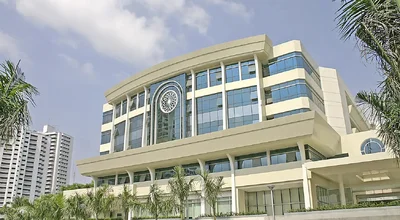
Samitivej Sukhumvit Hospital
Full-service hospital known for paediatrics, home to Thailand's first private children's hospital.
View hospital profile
Tell Us What You Need. We Do the Rest.
Share what you're considering and we'll come back with surgeon options, pricing, and a clear plan.
- Real hospital pricing with zero markup
- Matched with a specialist experienced in your specific procedure
- Full coordination from consultation to recovery


Trusted by patients worldwide
The complete guide to YAG Laser Capsulotomy in Thailand
Everything below is for readers who want the full detail: costs broken down, types and techniques, recovery, risks and safety, and planning your trip.
YAG Laser Specialists in Thailand
YAG capsulotomy is a routine procedure, but it should still be performed by an experienced ophthalmologist at a well-equipped centre.
Leading Eye Hospitals in Bangkok
Our partner hospitals have dedicated laser treatment suites with current-generation Nd:YAG systems. These are the same centres where our cataract surgery patients are treated, so post-cataract laser follow-up is part of their standard care pathway. Pressure monitoring equipment is available immediately post-treatment.
Experienced Ophthalmologists
YAG capsulotomy is performed by our partner ophthalmologists who also perform cataract surgery. This means they understand the IOL design in your eye and can calibrate the capsulotomy size and pattern accordingly. That continuity of knowledge is more useful than it might sound for such a brief procedure.
Combining with Other Eye Treatments
Many international patients combine YAG capsulotomy with other eye care during their Thailand visit, such as a comprehensive eye check, glaucoma assessment, or treatment for the second eye. Your care coordinator can build a schedule that addresses everything during a single trip, making the most of your time and travel investment.
Understanding Your Results
YAG capsulotomy produces one of the most immediately gratifying results in ophthalmology; clarity restored within hours.
Typical YAG Capsulotomy Results
Patients consistently describe the improvement as dramatic. The hazy film that had been building since cataract surgery is cleared instantly, and the world looks sharp and vivid again. Colours that had faded back toward the pre-cataract surgery appearance return to their post-surgical clarity. The result is permanent.
What Results Can You Expect?
If your vision loss is caused by PCO and not another condition, the improvement after YAG capsulotomy is typically complete. Your surgeon confirms the diagnosis before treatment, which is important. If reduced vision is caused by macular degeneration, glaucoma, or another issue, YAG capsulotomy will not address those problems. A proper assessment before treatment ensures realistic expectations.
YAG Capsulotomy Cost in Thailand
Average Cost of YAG Capsulotomy
YAG laser capsulotomy in Thailand typically costs between $500 and $900 per eye. This covers the ophthalmologist fee, the laser treatment, pre-treatment assessment, post-treatment pressure check, and any prescribed drops. The cost is straightforward because the procedure itself is standardised.
Cost Breakdown
The total includes the specialist ophthalmologist fee, YAG laser usage fee, pre-treatment assessment, dilating and anaesthetic drops, post-treatment pressure monitoring, a short course of anti-inflammatory drops, and a follow-up appointment. There are no significant additional variables.
What Affects the Price?
There is little price variation for YAG capsulotomy because the procedure is standardised. The main variables are the hospital tier and the treating ophthalmologist's experience level. If both eyes need treatment, they are typically staged on separate days so the first eye's pressure response can be reviewed before treating the second.
Thailand vs International Price Comparison
At $500–$900 per eye, YAG capsulotomy in Thailand sits well below the US ($1,250–$2,000), Australia (A$1,150–A$1,900), and UK (£1,000–£1,750), where it is often an out-of-pocket charge sitting behind an ophthalmology waiting list. The laser and the protocol are the same; only the facility and specialist fees differ.
Do You Need the Laser, or Can You Wait?
The main alternative to YAG capsulotomy is simply doing nothing for now. Posterior capsule opacification develops gradually, so if the haze is mild and not yet interfering with reading, driving, or daily life, watchful waiting is reasonable, and an updated glasses prescription can sometimes claw back a little of the lost clarity in the early stages. Some people put off the laser for months this way.
What waiting cannot do is reverse the clouding. The capsule does not clear on its own, and stronger glasses only correct refractive error, not the scattering of light caused by the opaque membrane, so glare and haze tend to creep on. There is no drop, supplement, or exercise that clears PCO; the only thing that physically reopens the light path is parting the capsule. Polishing the capsule or exchanging the lens implant is far more invasive and is reserved for unusual cases, not routine clouding.
When the haze is genuinely affecting your vision, YAG capsulotomy is the definitive answer: a brief, one-time treatment that clears the capsule permanently, which is what the rest of this page covers. The right moment is usually when the blur has started to bother you in everyday tasks rather than the instant any cloudiness appears.
YAG Capsulotomy Approach
YAG capsulotomy is a single, standardised laser treatment. The technique is the same everywhere; the variables are the size and placement of the opening, determined by your specific IOL and visual needs.
Standard YAG Posterior Capsulotomy
The pupil is dilated and a contact lens placed on the eye to focus the laser beam. The Nd:YAG laser delivers rapid pulses that create a clear opening in the cloudy membrane behind the IOL. Vision improvement is typically noticed within hours. The entire procedure takes 5–10 minutes.
- Painless treatment completed at the slit lamp in minutes1
- No incisions, no stitches, no sedation required
- Vision improvement within hours; results are permanent
- Best for: all patients with PCO after cataract surgery
Capsulotomy Pattern Selection
The surgeon may use a cruciate (cross-shaped) or circular pattern depending on opacification severity and IOL type. Circular openings create a clean round aperture. Cruciate patterns use intersecting lines. Both achieve excellent outcomes; the choice is a surgical preference based on the specific case.
- Pattern chosen based on capsule thickness and IOL design
- Opening size calibrated to avoid IOL edge effects
- Circular patterns most common for standard cases
- Best for: all PCO cases; pattern selected at the surgeon's discretion
YAG Laser Technology
The Nd:YAG laser is a mature, well-proven photodisruptive technology, a Q-switched neodymium laser at 1064 nm that delivers ultra-short pulses to part the capsule without heat. The key variables are the surgeon's judgment in setting capsulotomy size, energy level, and pulse count, and how the focus is offset to protect the lens implant beneath.
Posterior Focus Offset
To protect the lens implant, the ophthalmologist focuses the laser a fraction behind the plane of the capsule rather than directly on it. This posterior offset keeps the energy peak away from the IOL surface, so the membrane is parted cleanly while the implant is spared. It is a small adjustment that makes the difference between a clean opening and a pitted lens, and it matters most over premium or multifocal IOLs, where surface pitting would scatter light and degrade the very optics the patient paid extra for.
- Laser focus set slightly behind the capsule to spare the IOL
- Reduces the risk of pitting or marking the lens implant
- Combined with the lowest effective energy per pulse
- Best for: all YAG capsulotomy procedures, especially over premium or multifocal IOLs
Laser Energy Calibration
The surgeon adjusts laser energy and pulse count based on capsule thickness. Thicker, more fibrotic capsules require slightly higher energy or more pulses. Thinner membranes respond to fewer, lower-energy applications. Getting this balance right minimises collateral stress on surrounding structures.
- Energy titrated to capsule thickness and opacity density
- Fewer pulses at lower energy for thinner membranes
- Minimises risk of IOL pitting or pressure spikes
- Best for: all YAG capsulotomy procedures; this is standard calibration
Post-Treatment Pressure Monitoring
Intraocular pressure is checked 30–60 minutes after the procedure. A transient pressure spike is the most common side effect and is usually mild and self-limiting. If pressure is elevated, a short course of pressure-lowering drops is prescribed. The check is quick but important.
- Pressure measured before discharge to detect any spike
- Transient elevation managed with a short course of drops if needed
- Anti-inflammatory drops prescribed for a few days post-treatment
- Best for: all patients; routine safety check after every YAG procedure
YAG Capsulotomy Recovery Timeline
First Few Hours
Vision may be slightly blurry from dilating drops. Most patients notice significant improvement in clarity within 1–4 hours. You can return to your hotel and rest comfortably. Avoid rubbing your eyes.
Day 1
Vision is typically noticeably clearer by morning. Anti-inflammatory drops may be prescribed for a few days. Continue any existing eye drop regimen as directed. Normal activities can resume.
Days 2–3
Most patients experience fully restored clarity. A follow-up appointment confirms the capsulotomy is complete and pressure is normal. All normal activities including reading, screens, and outdoor activities can resume.
Week 1 Onwards
Results are lasting. The cleared capsule does not regrow, and only rarely does any further clouding return. Further treatment for this condition is rarely needed. You can fly home with confidence.
When Can You Fly After YAG Capsulotomy?
You can fly within a few days of the procedure. There are no pressure-related restrictions as there are with gas-filled vitrectomy procedures. A follow-up check confirms the capsulotomy is complete and pressure is normal before departure. Most patients fly home 3–5 days after treatment.
When Can You Return to Normal Activities?
Normal activities including reading, screen use, driving, and exercise can resume within 24 hours. There are no physical restrictions beyond avoiding eye rubbing for a day or two. Most patients describe it as one of the easiest medical procedures they have experienced.
When Will You See Final Results?
Results are essentially immediate. Most patients notice significantly clearer vision within 1–4 hours of the procedure as the dilating drops wear off. By the next day, the improvement is fully apparent. The result is lasting; the opened capsule only rarely clouds over again.
Will It Hurt?
YAG capsulotomy is done under topical anaesthesia, which simply means numbing eye drops. You stay fully awake and sit upright at the slit lamp, the same kind of microscope used for a routine eye exam. There is no needle, no injection around the eye, and no sedation. The drops take effect in a minute or two and the ophthalmologist performing the laser is right in front of you the whole time, talking you through each step.
You will not see the surgery happening to your eye, and there is nothing to watch out for. What you do notice is some bright flashes of light from the laser and the gentle pressure of a small contact lens resting on the front of the eye to focus the beam. Neither is painful. The treatment itself takes only a few minutes, and because the eye is numb you feel no pain during it.
Beforehand you have a short assessment to confirm the clouded capsule is what is blurring your vision and that the eye is otherwise quiet, and dilating drops are put in to widen the pupil. Afterwards the eye can feel a little gritty or sensitive to light for a few hours as the drops wear off, which is mild and settles on its own; any lingering irritation is eased with the lubricating or anti-inflammatory drops your ophthalmologist provides.
Risks and Safety of YAG Capsulotomy
YAG capsulotomy is one of the safest procedures in ophthalmology. Serious complications are exceptionally rare. The risks that do exist are well understood and almost always transient.
- Temporary raised eye pressure, checked post-treatment and managed with drops if needed
- Transient floaters, debris from the capsule that clears within days to weeks
- Mild intraocular inflammation, treated with short-course anti-inflammatory drops
- Retinal detachment, very rare; slightly elevated risk in highly myopic patients
- IOL displacement, extremely rare; more theoretical than practical in modern practice
- Cystoid macular oedema, uncommon; responds to anti-inflammatory treatment
The pressure check after the procedure is the most important safety step. Any temporary spike is detected and managed immediately. For patients with pre-existing glaucoma or very high myopia, these conditions are factored into the decision to proceed and the monitoring plan afterward.
Is YAG Capsulotomy Safe in Thailand?
Yes. This is a standardised, well-established laser procedure performed at every serious eye centre worldwide. Thailand's specialist centres use the same Nd:YAG laser technology and follow the same clinical protocols as centres in the US, UK, and Australia. The procedure carries very low risk regardless of where it is performed.
How to Reduce Risks
The post-treatment pressure check is the key safety step. Ensure your centre performs this before discharging you. If you have pre-existing glaucoma, inform your treating ophthalmologist so that pressure management can be planned. Otherwise, the main precaution is simply using the prescribed anti-inflammatory drops for a few days.
Can YAG Capsulotomy Be Repeated?
It can be, but rarely needs to be. Once the posterior capsule is opened, that opening does not close again, and only rarely does any further clouding return. The treatment is usually a one-time procedure with a lasting result. This is one of its greatest advantages: a single short session resolves the problem for the great majority of patients.
Retinal Detachment Risk in High Myopia
Patients with high myopia have a small but real elevated risk of retinal detachment in the months following YAG capsulotomy. If you are highly myopic, discuss whether to delay the procedure or monitor closely with a retina specialist. Awareness of new floaters, flashes, or curtain-like visual disturbance after the laser should prompt an urgent retina review.
Planning Your Trip to Thailand for YAG Capsulotomy
YAG capsulotomy requires one of the shortest medical tourism stays; 3–5 days covers everything from assessment to follow-up.
How Long to Stay in Thailand
Plan for 3–5 days. The consultation and treatment can often be completed on the same day or within 24 hours. A follow-up pressure check the next day confirms everything is stable. Most patients are cleared to fly home 3–5 days after treatment.
What Is Included in a Medical Trip
Your care coordinator schedules the consultation, treatment, and follow-up. The quote covers the ophthalmologist fee, laser treatment, all drops, and the follow-up appointment. Flights and accommodation are arranged separately; this is typically a very short trip.
Combining with a Holiday
The minimal recovery makes this an easy procedure to combine with travel. By the day after treatment, your vision is clear and there are no restrictions on activities. Many patients treat the trip as a short break combined with a medical appointment, and the savings on the procedure often cover a significant portion of the travel cost.
Related Procedures
Other procedures that address similar goals or conditions, in case one of them is a closer fit for you.
Planning your treatment in Thailand
Independent guides to help you weigh the decision, before you commit to anything.
Common Questions About YAG Laser Capsulotomy in Thailand
Everything you need to know before your procedure

Medical References
Keep researching with AI
Open this guide in your AI assistant to dig deeper and ask the questions it didn't answer.
Opens in a new tab with this guide already loaded.
Medical disclaimer: Content on this site is provided for informational purposes and should not be treated as medical advice. Outcomes, timelines, and eligibility differ from person to person. Consult a qualified medical professional before making any decisions about surgery or treatment.
Ready to Get Started?
Speak with our care coordinators for a free, no-obligation consultation and personalised quote.
Get a Free Quote